How Coaches Get Clients From Facebook Groups
How business, health, and life coaches pick the right Facebook groups, share posts that start conversations, and turn group members into paying clients.
 MaherPost Team October 29, 2026 7 min read
Key takeaways
- Coaches win clients in groups by solving one small problem in public.
- Groups where your ideal client asks for help beat groups full of other coaches.
- A simple path from post to conversation to call matters more than posting volume.
- Consistency over months builds the recognition that turns into paid work.
Coaches get clients from Facebook groups by joining the groups where their ideal clients already ask for help, answering those questions better than anyone else, and posting short teaching content that invites a conversation. The client usually arrives through a direct message after they have seen you help other people a few times. The rest of this guide covers which groups to choose, what to post, how to move from comment to call, and how to keep it going without spending three hours a day in Facebook.
Why groups still work for coaches
Coaching is a trust purchase. Nobody pays $1,500 for a 12 week program from a stranger in an ad. They pay someone whose advice they have seen work, whose tone they like, and who seems to understand their exact situation.
Groups let you build that trust in public. When a member of a “Female Founders” group asks how to raise prices without losing clients and you give a clear, specific answer, every reader of that thread sees it. Some of them have the same problem. A few will click your profile. One might message you.
Groups also tell you what your audience struggles with in their own words. That is useful for your posts, your sales page, and your offer itself.
Choosing the right groups
The most common mistake coaches make is joining groups for coaches. Those groups are useful for peer support, but the members are your competitors, not your clients.
| Coaching niche | Groups where clients gather | Groups to skip for client work |
|---|---|---|
| Business coaching | Small business owner groups, local chamber groups, Etsy or Shopify seller groups | Coaching business groups |
| Fitness and nutrition | Local running clubs, postpartum moms groups, weight loss support groups | Personal trainer networking groups |
| Career coaching | Job seekers in your city, layoff support groups, industry career groups | Recruiter-only groups |
| Life and mindset coaching | Groups for new parents, divorce support, midlife career change | Life coach communities |
| Executive and leadership coaching | New manager groups, industry professional groups | Coach certification groups |
Check every group before committing to it. You want visible activity (several posts a day), members asking real questions, and admins who keep spam out. Look for a rule about self-promotion and a promo day. See how to find Facebook groups for your business for search methods that work. If you are a fitness coach, our fitness page has niche-specific notes, and the coaches page covers the general setup.
What coaches should post
Think of each post as a small free session. It should solve one problem or change how someone sees it.
Teaching posts
Pick one question you hear constantly and answer it in five to eight short lines. A business coach could write: “Three signs you are undercharging: you are booked solid but stressed about money, clients never push back on price, and you dread taking on new work.” Then one line on what to do about it.
Story posts
A short before and after from a client (with permission and without identifying details). “A client came to me working 60 hours a week as a bookkeeper. We cut her client list by a third and raised her rates. Six months later she works 40 hours and earns more.” Keep it plain and believable.
Question posts
“What is the hardest part of going back to work after maternity leave?” Question posts get comments, and comments are your chance to talk to people one to one.
Light offer posts
On promo days, or in groups that allow it, share a free workshop, a short checklist, or a limited number of free 20 minute calls. Make the offer small. You are inviting a conversation, not selling the full program in a Facebook post.
Our Facebook group post ideas guide has 30+ more formats you can adapt.
Templates coaches can copy
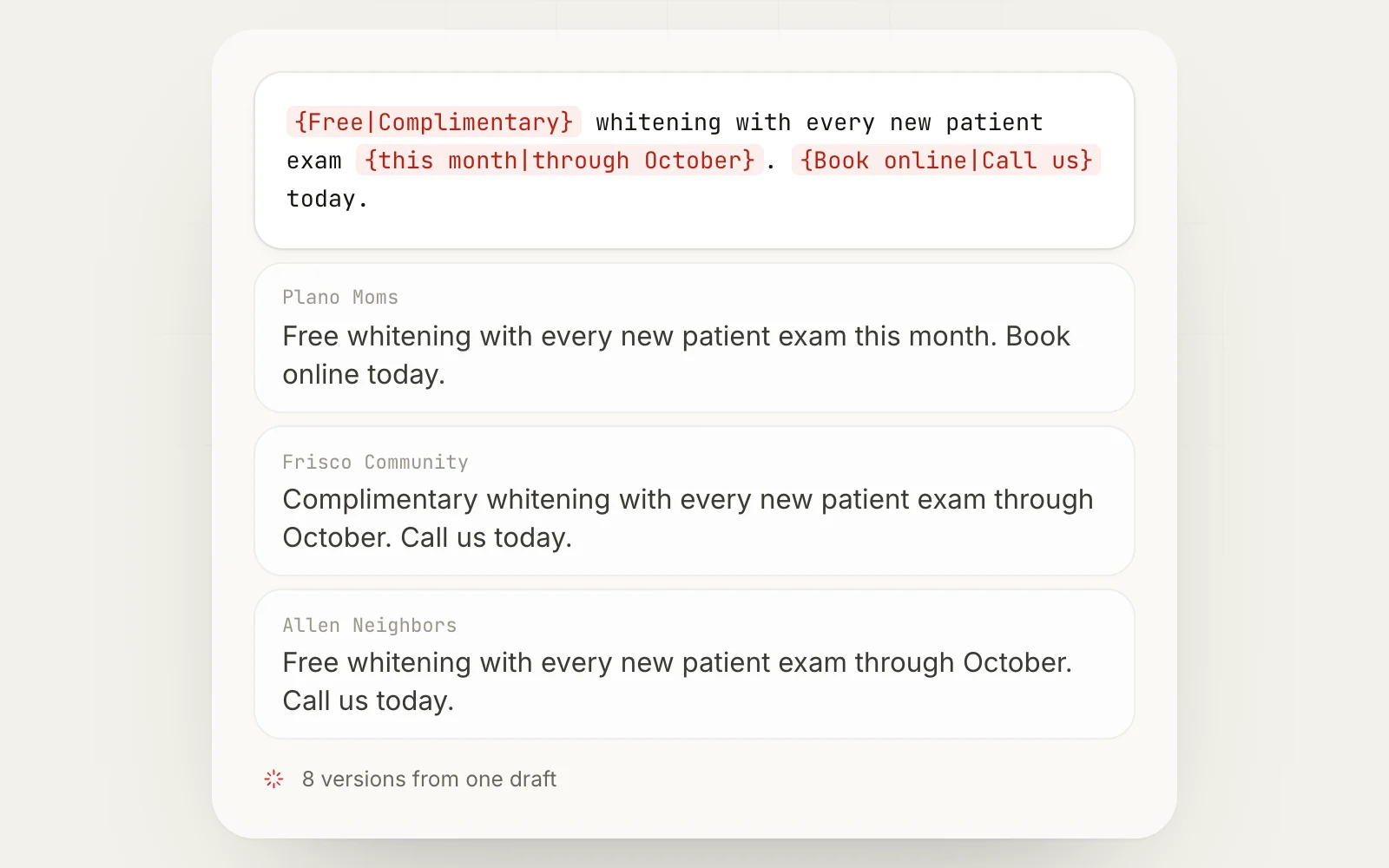
The bracket sections below are spintax: each group gets one option per set, so your wording is not identical across groups.
Teaching post
{One thing|Something} I see {all the time|constantly} with {service business owners|freelancers}:
They raise prices for new clients but never for existing ones.
{Try this|Here is a simple fix}: give current clients 60 days notice, a short reason, and a thank you.
{Most stay|In my experience most clients stay}. {Questions welcome below|Happy to help in the comments}.
Workshop invite for promo day
{Promo day|Self-promo Saturday}: I am running a free {45 minute|one hour} workshop on {pricing your services|raising your rates without losing clients}.
{Thursday at 7pm Eastern|Next Thursday evening}. Comment "pricing" and I will send you the details.
Discovery call offer
I have {three|four} free 20 minute calls open this week for {new managers|first-time team leads} who {feel stuck|are struggling with a difficult report}.
No pitch, just a plan you can use. {Comment or message me|Send me a message} if you want one.
Use the spintax generator to build variations from your own sentences.
From comment to client: the conversation path
Posts get attention. Conversations get clients. Most coaches lose people at the step between the two.
- Reply to every comment within a few hours with something useful, not “Thanks.” Add a follow-up question.
- Move to messages when invited. If someone asks a detailed question, say “Happy to go deeper, mind if I message you?” Then wait for a yes.
- Ask before you offer. In the first message, ask two or three questions about their situation. Listen.
- Offer a short call if it seems like a fit. Give a specific next step: a booking link or two time options.
- Follow up once if they go quiet. One polite nudge after a few days, then let it go.
- Track it. A simple spreadsheet with name, group, date, and stage tells you which groups produce clients.
A realistic expectation: a solo coach active in 20 groups, posting once a week in each and replying daily, might start a handful of meaningful conversations a week after the first month. Some of those become calls, and a smaller share become clients. Your numbers will vary by niche and price, which is exactly why tracking matters.
Catching people who ask for a coach
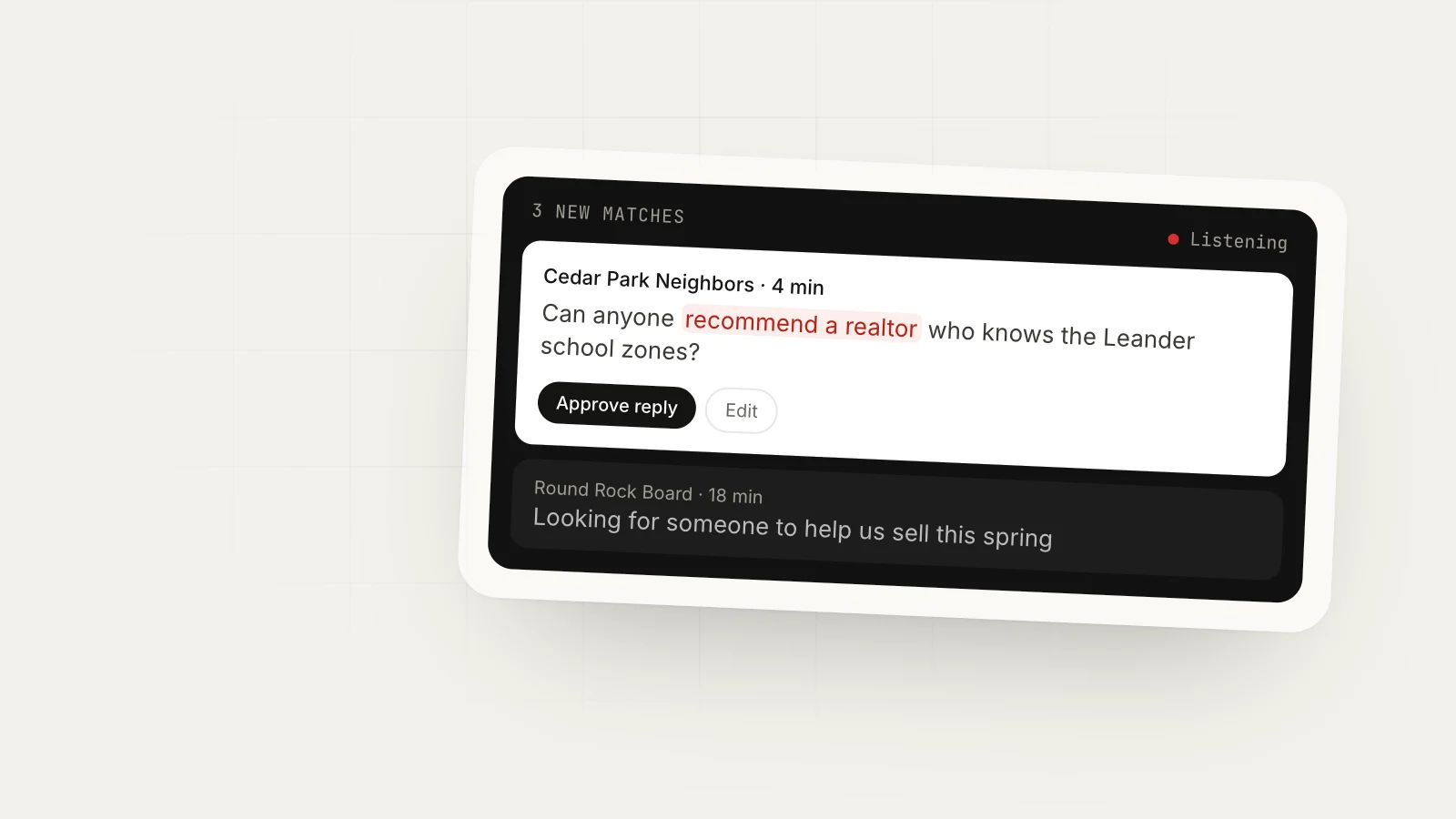
Some members post directly: “Looking for a career coach who works with engineers” or “Has anyone hired a business coach, was it worth it?” Those are your warmest leads, and other coaches will answer within the hour. Search your groups for phrases like “recommend a coach”, “anyone hired”, and “need help with” a few times a week. More on this in how to get leads from Facebook groups.
How often coaches should post
Facebook does not publish exact limits on group posting, and every group has its own rules. A sustainable rhythm for a solo coach:
- One teaching or story post per group per week
- Offers only on promo days or in groups that clearly allow them
- Daily comments and replies, which carry little risk and build the most trust
- Different wording in each group and several minutes between posts
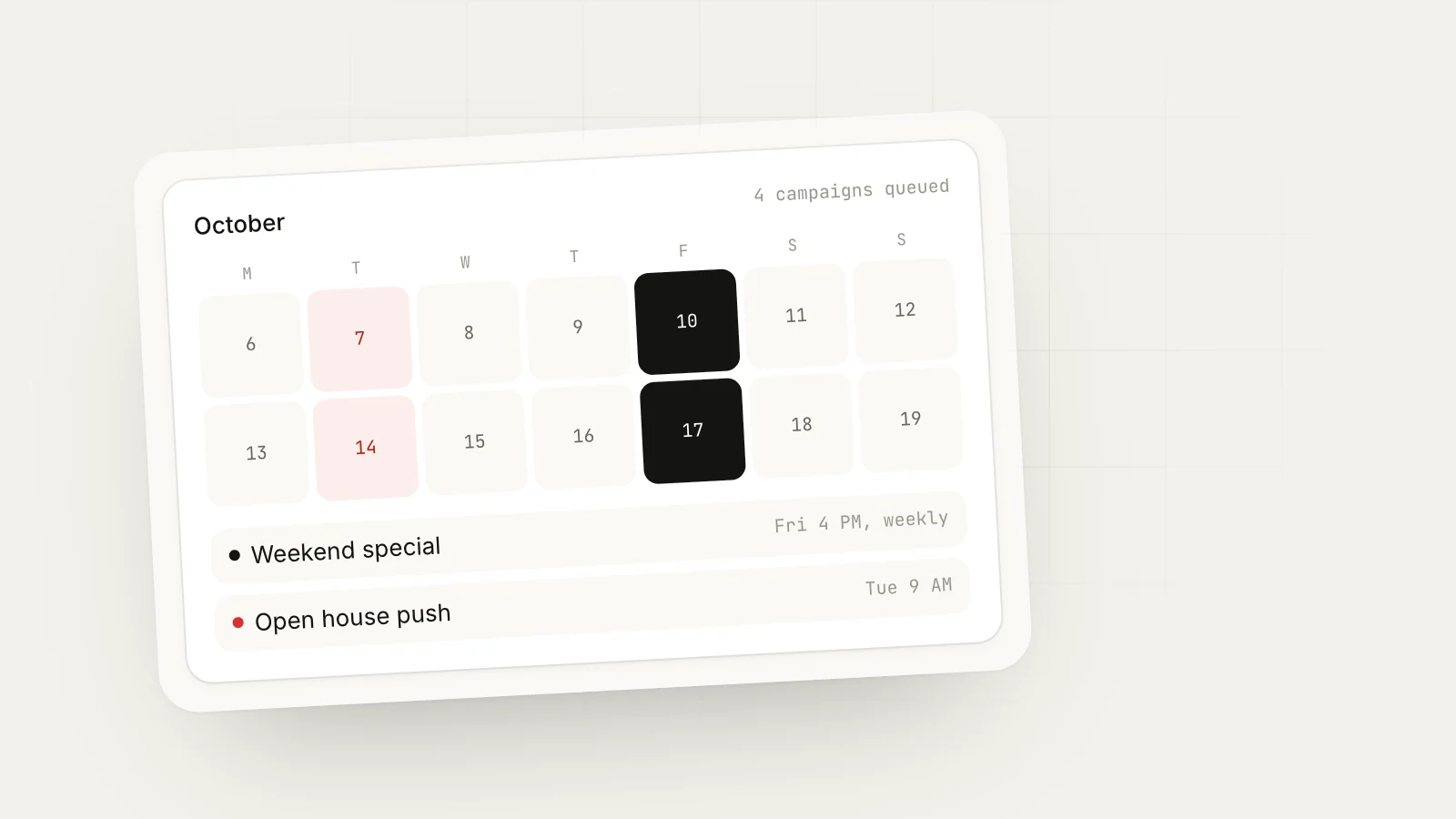
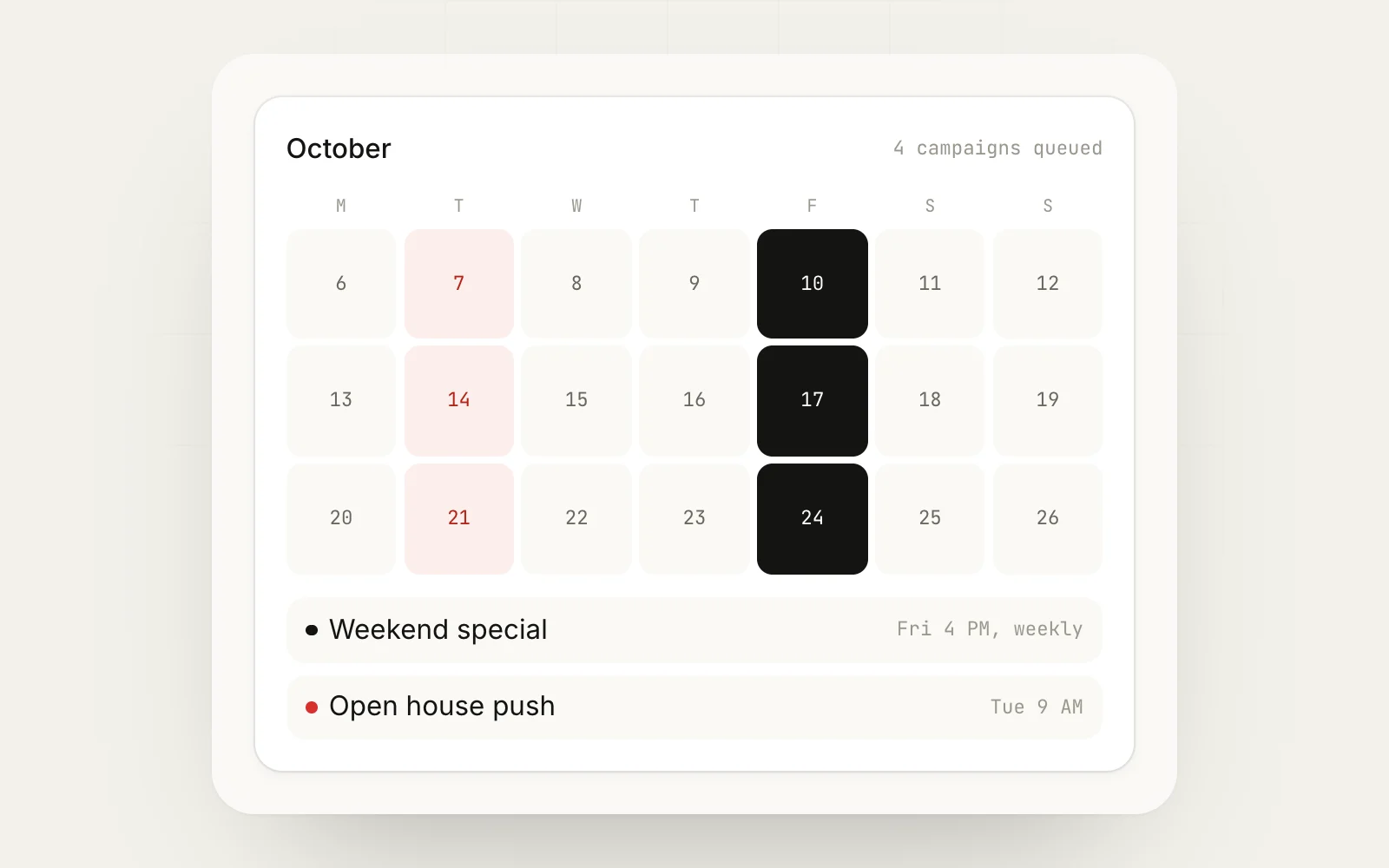
That adds up to 10 to 30 posts a week across your groups, plus replies. The replies need you. The posts can be scheduled. If any group declines your posts repeatedly, read the rules admins use for promotional posts and adjust before trying again. For pacing and safety, see is a Facebook auto poster safe.
Mistakes that cost coaches clients
- Selling in the first line. “Book a call now” before you have helped anyone reads as spam.
- Generic advice. “Believe in yourself” helps nobody. Specific, slightly uncomfortable advice gets saved.
- Disappearing for weeks. Recognition comes from repeated exposure. Two months of steady activity beats one busy week.
- Same post everywhere. Admins and Facebook both notice identical copy. Adjust the opening and examples for each audience.
- Links in groups that ban them. Use the first comment where allowed, or invite people to message you.
Should you start your own group?
Many coaches start a group in their first month, invite 40 friends, and post into silence. A group of your own works when people already know you and want more of what you share. Until then, existing groups give you an audience that someone else has spent years building.
A sensible order looks like this:
- Months one to three: be active in other people’s groups. Answer questions, post teaching pieces, start conversations.
- Once you get regular messages: invite interested people to a free workshop or a short challenge.
- After the workshop: open a small group for attendees, where you can go deeper and make offers without breaking anyone else’s rules.
Your own group then becomes the place warm leads gather, while outside groups keep bringing new people in. If you run a course alongside coaching, the course creators page covers how that mix works.
Weekly checklist for coaches
- One teaching or story post in each core group
- Every comment answered with a useful reply
- Searched each group for people asking for help
- Messages started only after someone showed interest
- Promo posts only on allowed days
- Wording varied for each group
- Spreadsheet updated with new conversations and calls
Next step
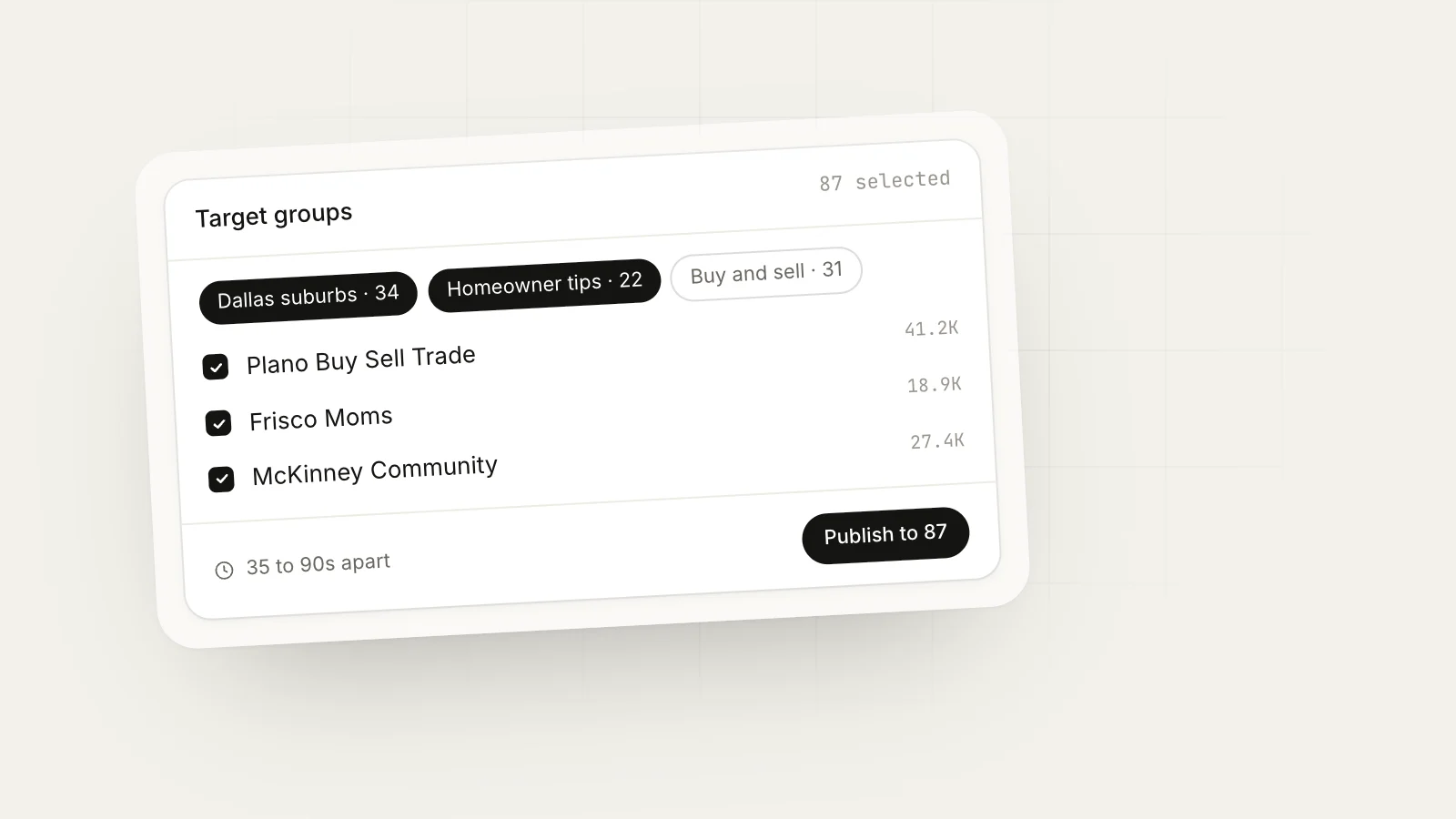
Choose 10 to 20 groups where your clients actually talk, and spend the first month answering questions and posting one teaching piece a week by hand. Once you see which groups produce conversations, MaherPost can schedule your weekly posts across them with different wording per group, so your time goes into replies and calls. Its Lead Radar watches your groups for posts like “looking for a coach” and drafts a reply that you approve before anything is sent. The scheduling feature and pricing pages have the details.
Put this into practice.
MaherPost posts to every Facebook group you have joined, with spintax, safe pacing and a log of every delivery. $29 a month.
Written by the MaherPost Team
We build MaherPost and run group campaigns with it every week. These guides come from what we see working, and what gets accounts in trouble. Questions or corrections: support@maherpost.com.